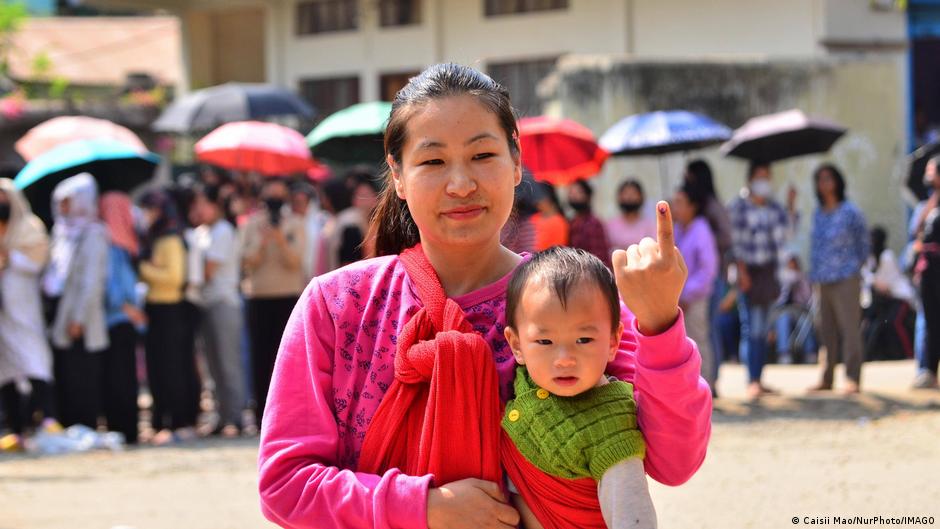
India’s Parliament is preparing for a landmark three-day special session beginning April 16 to deliberate on implementing 33 percent reservation for women in the Lok Sabha and state assemblies—a political milestone that has remained pending for over three decades.
The central government has scheduled the special parliamentary session for April 16, 17, and 18 to introduce three critical bills aimed at operationalizing the women’s reservation policy. The deliberations will include 18 hours of discussion in the Lok Sabha and 10 hours in the Rajya Sabha. The three bills to be presented include constitutional amendments, delimitation provisions, and legislative modifications for union territories, collectively designed to reserve one-third of parliamentary seats for women in the upcoming 2029 general elections.
Background: A Long-Pending Reform
The push for women’s parliamentary representation gained formal momentum when the “Nari Shakti Vandhan Adhiniyam” (Women’s Empowerment Act) was passed by both houses of Parliament in 2023. The legislation reserved 33 percent of seats in the Lok Sabha and state legislative assemblies for women candidates. However, implementation was deliberately deferred, contingent upon the completion of a new census and subsequent delimitation—the redrawing of electoral constituency boundaries.
Under the current proposal, the Lok Sabha’s existing 543 seats would be increased to 816, with approximately 273 seats reserved exclusively for women. This represents one of the most significant structural reforms to Indian democratic representation since independence.
The genesis of this demand dates back to 1996 when the first women’s reservation bill was introduced. The legislation subsequently passed the Rajya Sabha in 2010 but stalled in the Lok Sabha, failing to advance further. The 128th Constitutional Amendment Bill brought in 2023 finally secured passage in both houses, clearing the legislative pathway for implementation.
Regional Opposition and Delimitation Concerns
The proposed delimitation exercise has triggered significant opposition from southern states, particularly Tamil Nadu, Kerala, Andhra Pradesh, Telangana, and Karnataka. These states argue that conducting delimitation based on the 2011 census would unfairly reduce their Lok Sabha representation, as they have successfully implemented population control policies over the past decade.
Tamil Nadu Chief Minister M.K. Stalin issued a stark warning about the potential consequences: “If states’ representation in the Lok Sabha decreases, the central funds allocated to them may be reduced. This will negatively impact women’s empowerment initiatives, reduce educational opportunities for students, and harm farming communities.”
The delimitation issue represents more than a technical administrative matter—it touches upon fundamental concerns about resource allocation and regional equity. States that have invested heavily in family planning programs now face the prospect of reduced parliamentary representation, creating a perverse incentive structure that punishes demographic responsibility.
Coalition Partners and Policy Divergences
Opposition parties have articulated concerns extending beyond regional representation issues. The Samajwadi Party, represented by Lok Sabha member Ikra Chaudhry from Uttar Pradesh’s Kairana constituency, has expressed support for the women’s reservation principle while questioning the implementation methodology.
Chaudhry highlighted her party’s dual concerns: first, that the government should extend reservation benefits to Other Backward Classes (OBC) women alongside Scheduled Caste (SC) and Scheduled Tribe (ST) women; and second, that reservation should be extended to the Rajya Sabha as well. The party leadership has previously raised these points with the government, which responded by indicating that OBC women’s reservation would only be implemented once OBC reservation is comprehensively applied across the entire Lok Sabha.
“If OBC reservation is a separate issue, then census and delimitation are also distinct matters not directly linked to women’s reservation,” Chaudhry argued, pointing to what her party views as artificial bundling of unrelated policy questions.
The Samajwadi Party’s broader concern reflects a pattern within opposition ranks: while supporting women’s political empowerment, they question whether the reservation should apply exclusively to General category seats or be extended to reserved categories as well. This distinction carries significant implications for representation of marginalized women, particularly those from OBC backgrounds.
Additionally, multiple opposition voices have raised the issue of ensuring women’s meaningful participation within party structures themselves. The argument suggests that reserving parliamentary seats means little if women lack genuine decision-making authority within political parties.
Congress Critique: Regional Divisions and Political Strategy
Congress party spokesperson Gautam Seth has accused the current government of using delimitation to artificially create divisions between northern and southern India. This criticism suggests that the bundling of women’s reservation with census-dependent delimitation represents an attempt to obscure what opposition parties view as an unfair redistribution of parliamentary seats favoring demographically larger northern states.
Implementation Timeline and Electoral Impact
If all three bills successfully pass parliament, the 33 percent women’s reservation will take effect during the 2029 general elections. This timeline raises practical questions about candidate selection processes, party preparation, and the transition mechanisms political parties will employ to adjust their selection criteria and internal democratic processes.
Analysis: Multiple Agendas Converging
The parliamentary debate scheduled for April represents far more than a simple discussion of women’s empowerment. Multiple stakeholders are pursuing distinct agendas:
The central government appears focused on implementing its stated commitment to gender equality while simultaneously addressing what it views as necessary delimitation corrections. Southern states prioritize protecting their parliamentary representation and consequent resource allocation. Opposition parties seek to advance women’s rights while simultaneously protecting their political interests and advocating for more inclusive reservation frameworks that encompass backward classes.
The question of whether women’s reservation should apply to reserved category seats versus general category seats remains contentious. This distinction determines whether the policy primarily benefits women from dominant castes or creates a more equitable system benefiting marginalized communities’ female members.
Conclusion
India’s forthcoming parliamentary debate on women’s 33 percent reservation represents a defining moment for the nation’s democratic representation. While the principle of enhanced women’s political participation commands broad consensus across party lines, significant disagreements persist regarding implementation methodology, regional implications, and the scope of backward class inclusion.
The April session will reveal whether parliament can navigate these competing concerns to produce legislation that advances gender equality while addressing legitimate concerns about regional equity and social inclusion. The outcome will substantially shape Indian democracy’s character for decades to come, determining not merely how many women serve in parliament, but which women gain access to political power and how fairly representation is distributed across India’s diverse regions and communities.